
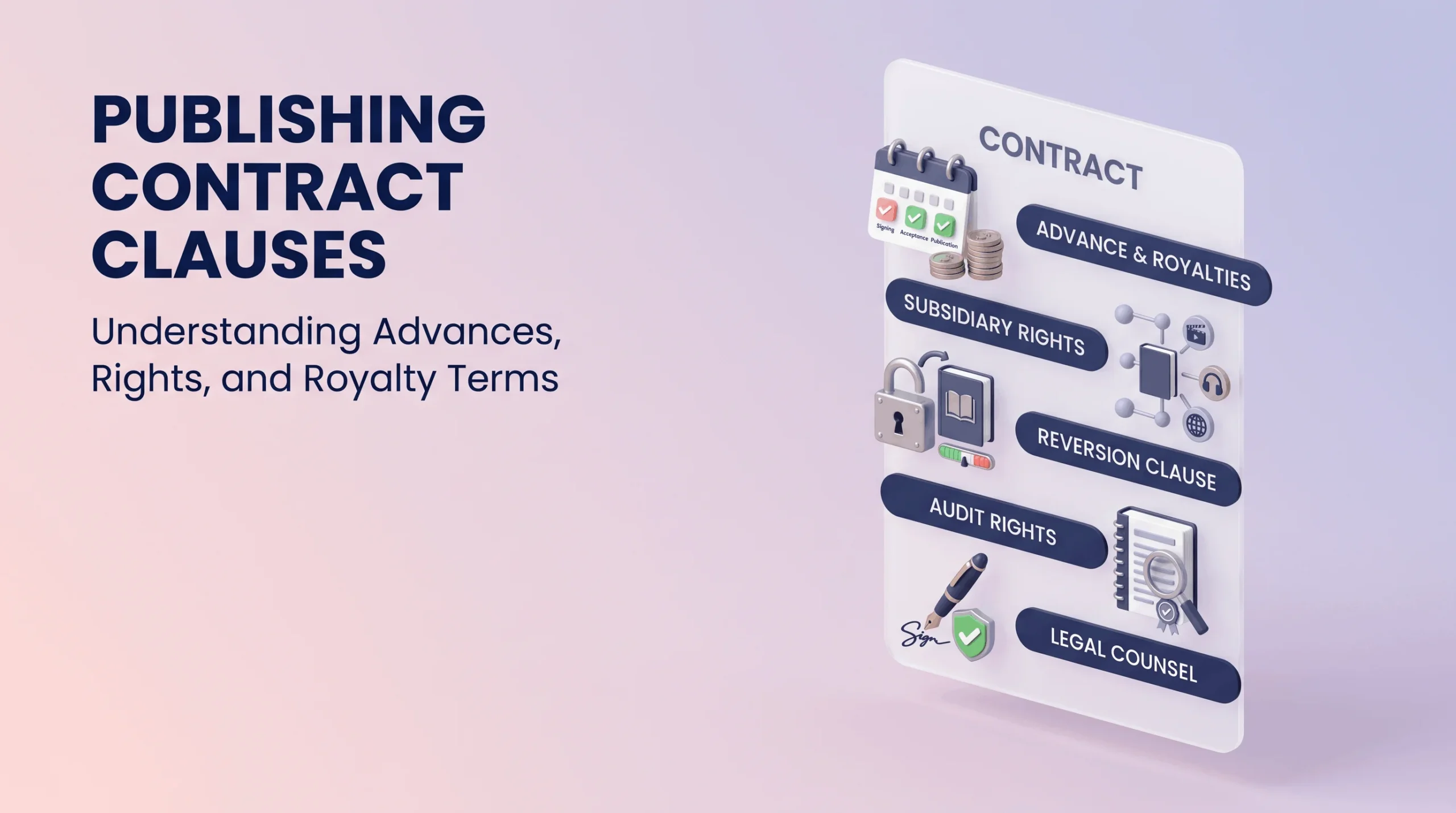
A publishing contract is a genuinely dense legal document, and most first-time authors sign one without fully understanding several clauses that will materially affect their income and creative control for years afterward. Here’s what actually matters most.
Decoding Standard Industry Contract Terms
Advance structures typically pay out in installments a portion on signing, a portion on manuscript delivery and acceptance, sometimes a further portion on publication rather than as one lump sum upfront. Royalty rates vary meaningfully by format, with eBook royalties typically running higher as a percentage than print royalties, since digital editions carry no physical production cost weighing against the calculation. Understanding these baseline structures before negotiation begins helps an author recognize when a specific offer sits within reasonable industry norms versus when a term is genuinely unusual and worth pushing back on.
Subsidiary Rights Options: The Revenue Stream Authors Frequently Overlook
Subsidiary rights cover uses beyond the primary print or digital edition foreign translation, film and television adaptation, audiobook production, merchandising. A contract needs to specify clearly which of these rights the publisher acquires and which remain with the author to negotiate separately. Authors who retain key subsidiary rights, rather than signing away the entire bundle as part of the original deal, preserve meaningful additional income potential a successful book can generate well beyond its original publishing agreement.
Reversion Clauses: Getting Your Rights Back Eventually
A reversion clause specifies the conditions under which rights to a book return to the author typically triggered when sales fall below a defined threshold, or after a set period has passed since publication. Without a clearly defined reversion clause, rights can remain tied up with a publisher indefinitely, even long after the book has effectively stopped generating meaningful income for either party involved. Negotiating clear, reasonable reversion terms protects an author’s ability to eventually reclaim and potentially re-publish their own work.
Audit Rights: Verifying You’re Actually Being Paid Correctly
An audit clause gives an author the contractual right to formally review a publisher’s sales and royalty records, verifying that reported figures genuinely match actual sales. While rarely exercised in practice, having this right explicitly available in the contract provides real leverage and a meaningful layer of accountability, particularly for a book that performs unexpectedly well and where accurate royalty reporting genuinely matters more as the actual dollar amounts at stake grow larger.
Protecting Long-Term Earnings Beyond the Initial Deal
A publishing contract shapes an author’s income for years, sometimes decades, well beyond the original signing date which makes every individual clause worth genuinely understanding rather than skimming past in eagerness to simply sign and move forward. Royalty escalation clauses, which increase the royalty rate once sales cross certain defined thresholds, out-of-print definitions that trigger reversion, and clear specification of exactly which formats and territories a deal actually covers all meaningfully affect long-term earnings in ways that aren’t always obvious on a first casual read-through.
Why Professional Guidance Matters at Contract Stage Specifically
Publishing contracts are deliberately written by publishers, for publishers’ interests first, and even genuinely well-intentioned editors aren’t positioned to negotiate against their own employer’s financial interests on an author’s behalf. Professional representation at this specific stage exists precisely to read every clause with the author’s long-term interests as the explicit priority, catching unfavorable terms before a signature makes them permanently binding rather than after a book is already published and the contract terms can no longer realistically be revisited or renegotiated.