
Most audiobook rejections have nothing to do with performance quality and everything to do with numbers most authors have never heard of before their first submission bounces back. Here’s what ACX and other major platforms are actually checking.
Decibel Ceilings: Why “Sounds Fine” Isn’t Good Enough
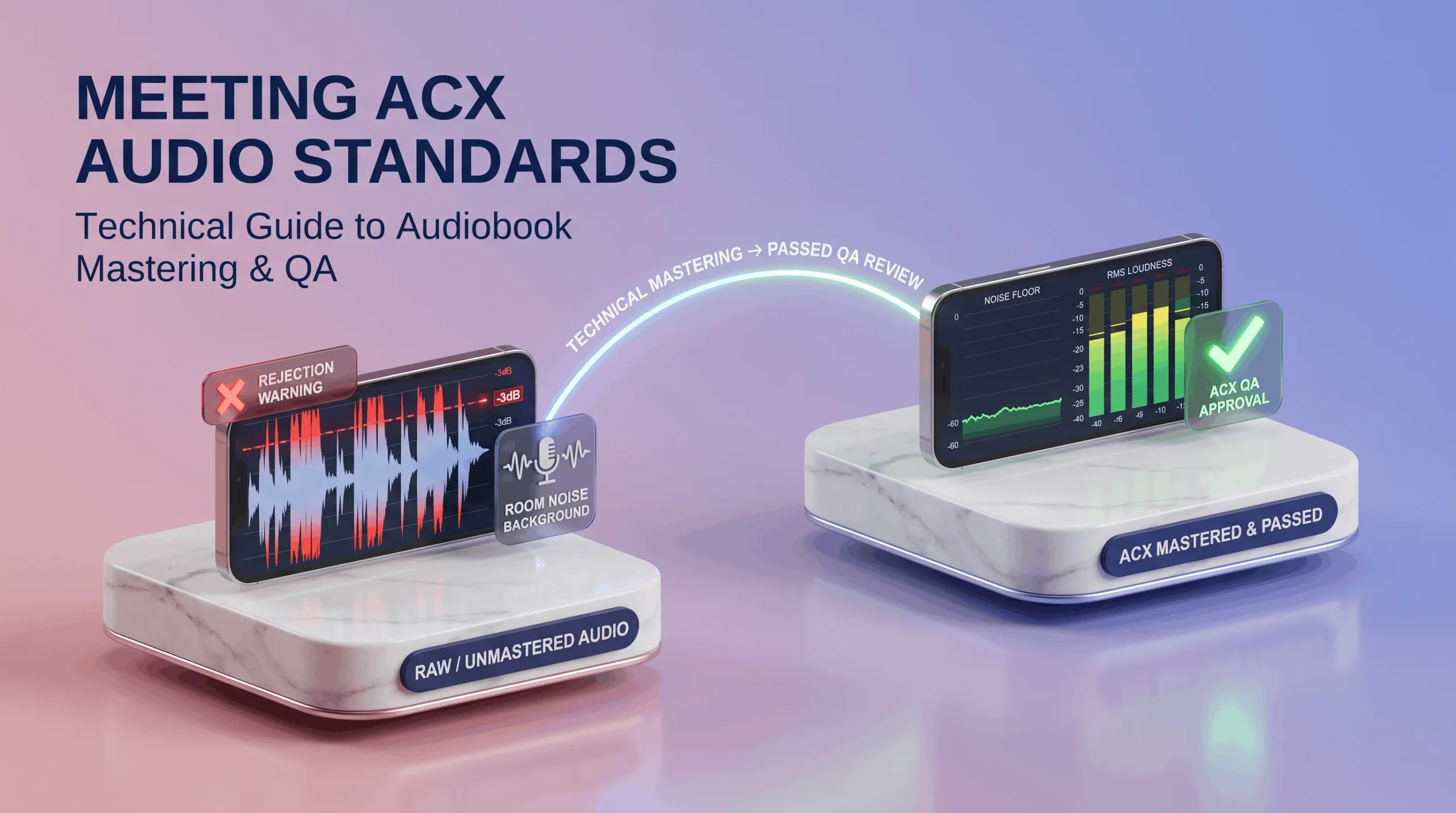
Peak audio levels need to stay below -3dB to avoid clipping the harsh, distorted sound that happens when audio tries to exceed the maximum level a format can represent cleanly. A recording that sounds acceptable through basic laptop speakers can still contain peaks that clip on higher-quality playback systems, which is exactly why platforms enforce this ceiling through automated technical review rather than relying on a human listening pass alone.
Background Noise Reduction: The Invisible Problem
Room hum, HVAC noise, distant traffic sounds a narrator’s ear tunes out during recording but that a listener notices immediately, especially through headphones in a quiet room. ACX requires a noise floor at or below -60dB RMS, meaning the quietest parts of your recording the silence between words and sentences need to stay well below that threshold. Achieving this requires either a properly treated recording space from the start or careful noise reduction processing afterward, and skipping this step is one of the most common reasons a technically well-performed recording still fails quality review.
Room Acoustics: Getting It Right Before Recording Even Starts
Untreated rooms create echo and reflection that no amount of post-production editing fully removes without also degrading voice quality. Soft furnishings, acoustic panels, or even recording in a smaller, carpeted space with curtains dramatically reduces reflection compared to a bare room with hard walls and flooring. This matters more than most first-time audiobook producers expect a narration performance can be genuinely excellent and still sound unprofessional purely because of room reflection nobody addressed before hitting record.
Pacing Pauses: The Technical Spec Hiding in Plain Sight
ACX specifies acceptable pause length between chapters and at the start and end of each audio file generally a few seconds of clean silence, not abrupt cuts and not overly long dead air either. This sounds minor until a file gets rejected specifically for pause timing that’s technically outside the accepted range, an easy fix once identified but a frustrating discovery after an otherwise clean submission bounces back.
RMS Levels: The Number That Determines Consistent Volume
RMS, or root mean square, measures average loudness across the recording rather than just peak moments. ACX requires RMS levels generally within a specific range relative to full scale, ensuring a listener doesn’t need to constantly adjust volume between quiet narration passages and louder dialogue. Getting RMS consistent across an entire multi-hour recording, chapter to chapter, is a mastering skill in itself inconsistent levels between chapters is a common giveaway of a rushed, unmastered production.
Passing Strict QA Checks on Audible and Apple Books
Each platform runs its own automated technical review before a file goes live, checking peak levels, RMS, noise floor, and file format specifications against their published requirements. Submitting a file that hasn’t been checked against these specific numbers beforehand is essentially submitting blind a rejection notice tells you something failed, but rarely explains exactly which parameter or by how much, turning what should be a straightforward technical fix into a frustrating guessing game.
Why Mastering Isn’t Optional
Every one of these standards exists for a practical listening reason, not arbitrary platform bureaucracy consistent volume, clean silence, controlled peaks all directly affect whether a listener has a comfortable experience or reaches for the volume knob every few minutes. A properly mastered audiobook, checked against these specific technical benchmarks before submission rather than after a rejection, is the difference between a smooth launch and a multi-week delay spent troubleshooting numbers that could have been caught in a single pre-submission review pass.