
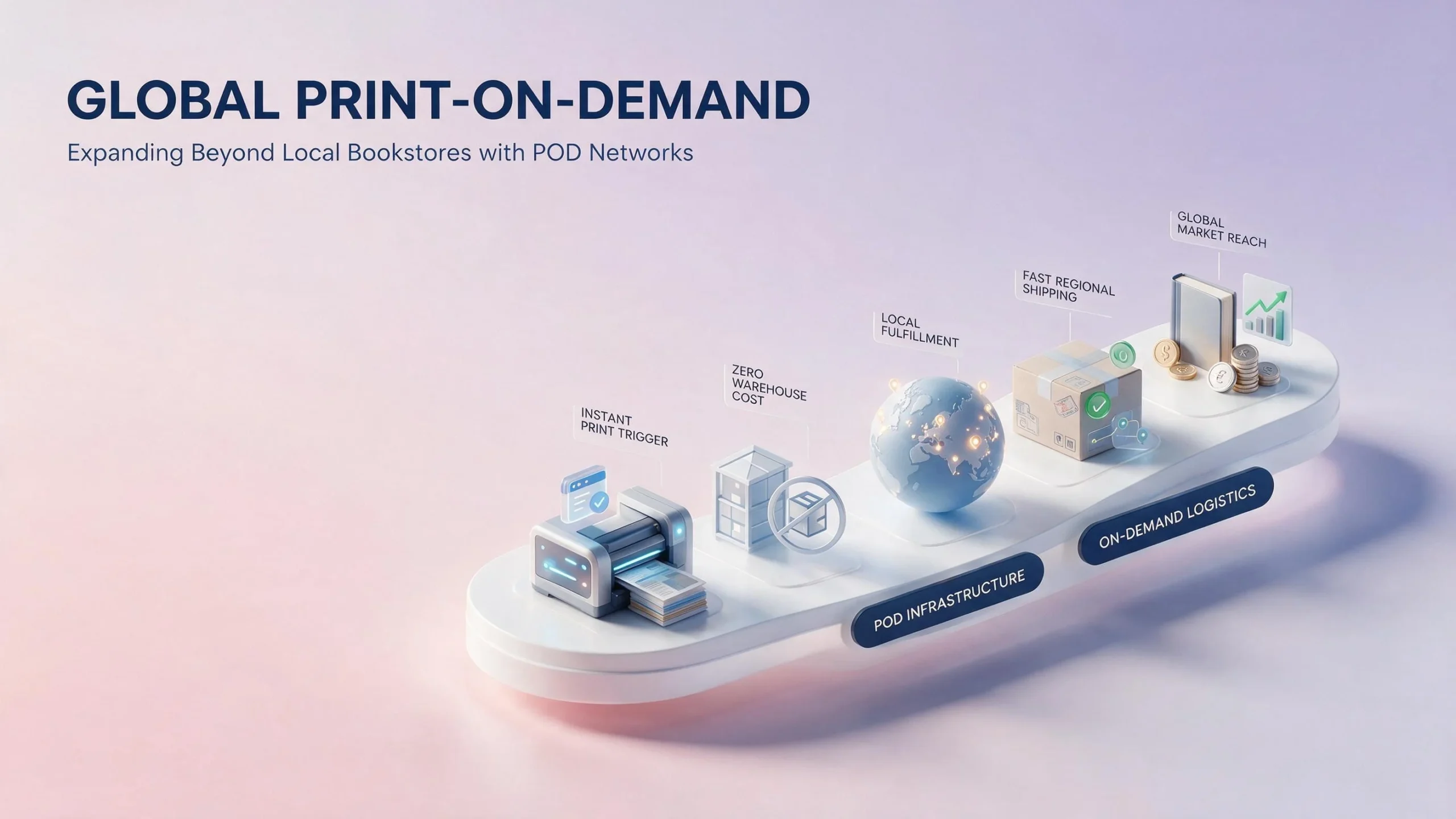
Physical book distribution used to mean choosing between an expensive bulk print run and no physical presence at all. Print-on-demand changed that math entirely, and understanding how it actually works internationally opens up markets most independent authors never seriously consider.
The Basic Mechanics of Print-on-Demand Infrastructure
Print-on-demand means a physical copy gets printed individually only once a specific order comes in, rather than existing as pre-printed inventory sitting in a warehouse waiting to sell. A reader orders a copy, the order triggers a print job at a facility, and that single copy gets printed, bound, and shipped the entire physical production process compressed into the window between order and delivery rather than happening months in advance on pure speculation.
Eliminating Inventory Overhead Entirely
Traditional print runs require paying upfront for a bulk quantity, storing that inventory somewhere, and absorbing the financial risk if the books don’t sell as quickly as hoped. Print-on-demand removes every part of that equation no upfront bulk cost, no storage fees, no unsold inventory sitting as dead capital on a balance sheet. This is precisely what makes international expansion financially realistic for independent authors who could never justify paying for and storing bulk inventory across multiple countries simultaneously.
International Shipping Barriers: The Problem POD Actually Solves
Shipping a physical book internationally from a single domestic warehouse is slow and expensive customs delays, high shipping costs, and long delivery windows that frustrate international readers and quietly kill international sales before they ever really get started. Global print-on-demand networks solve this by printing locally, within the destination country or region, rather than shipping a finished physical product across an ocean for every single order.
Localized Print Fulfillment Networks: Printing Closer to the Reader
Major print-on-demand networks operate facilities across multiple countries and regions, which means an order placed in Germany gets printed at a facility in or near Germany, not shipped internationally from a warehouse in the United States. This dramatically cuts shipping time and cost for the international reader, making a book ordered from overseas feel just as immediate and affordable as one ordered domestically.
Why This Matters More Than Most Authors Initially Realize
Slow, expensive international shipping is a genuine and significant barrier to overseas book sales, one that quietly suppresses demand an author never even sees reflected in their sales data readers who would have bought the book simply don’t, once they see the shipping cost and delivery estimate. Localized print fulfillment removes that specific friction point, making international physical sales genuinely viable rather than a theoretical possibility that rarely converts in practice.
Setting Up Global POD Distribution Correctly
Configuring print-on-demand across an international network requires the same file meeting technical specifications correctly across every regional printing facility trim size, bleed, color mode, and paper stock availability can all vary slightly by region, and a file that prints perfectly in one country’s facility can encounter unexpected issues in another’s without proper cross-region validation beforehand.
The Real Opportunity Global POD Actually Represents
Authors who understand global print-on-demand correctly stop thinking about international sales as a nice-to-have afterthought and start treating international markets as genuinely reachable revenue, without the financial risk that used to make overseas physical distribution impractical for anyone without serious publisher-level backing and resources.