
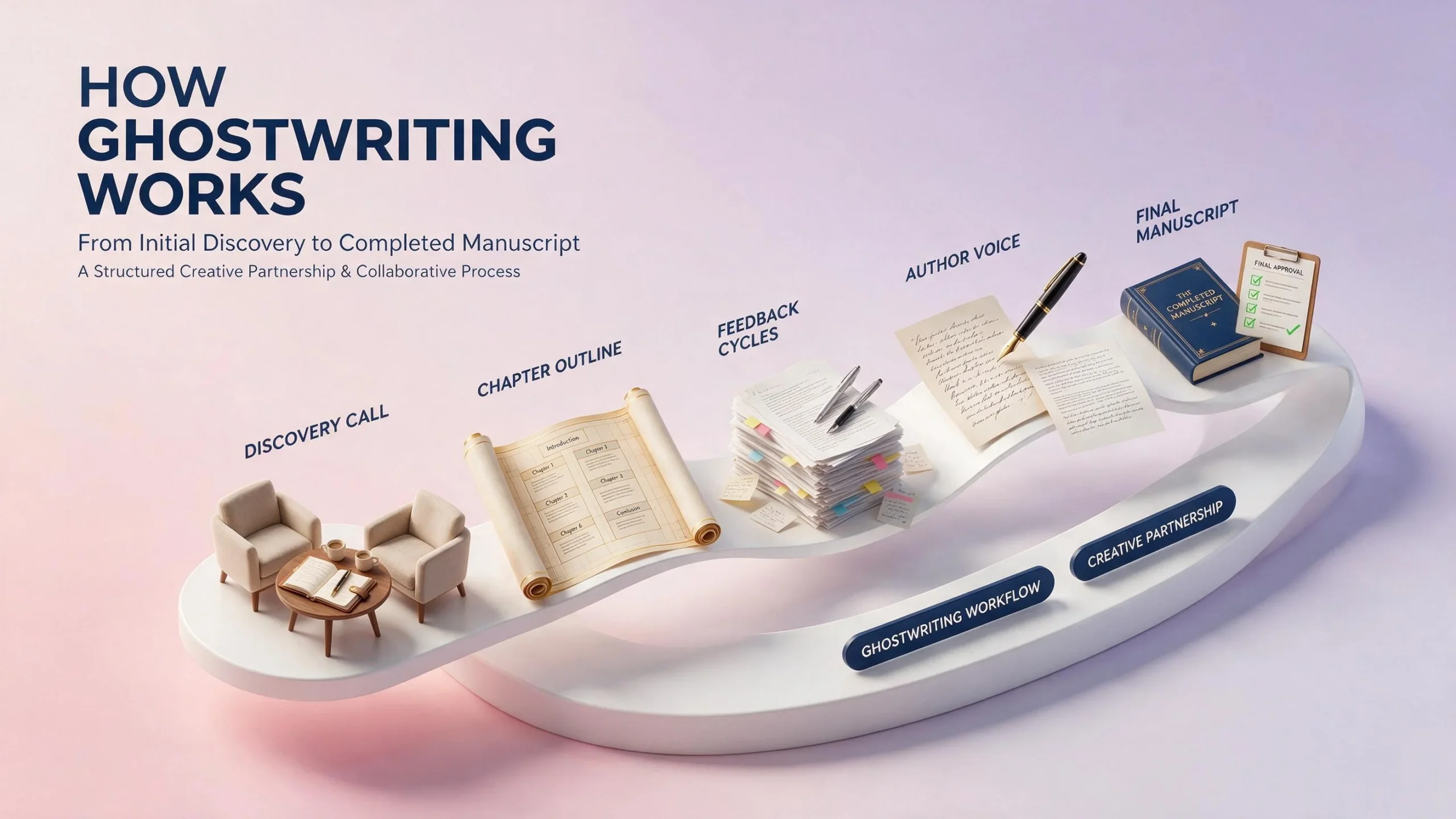
Most people picture ghostwriting as handing over a vague idea and receiving a finished book months later, like some kind of literary vending machine. The actual process looks nothing like that. It’s closer to a genuine creative partnership, built on structured collaboration rather than a one-time handoff.
The Discovery Call: Where Everything Actually Starts
Before any writing happens, a real discovery conversation establishes what the book actually needs to be who it’s for, what it needs to accomplish, and what story or expertise you’re actually bringing to it. This isn’t a formality. A ghostwriter who skips genuine discovery and jumps straight to drafting is building on an assumption instead of an understanding, and that gap tends to surface expensively later, usually after several chapters are already written in a direction that doesn’t quite fit.
Outline Development: The Roadmap That Prevents Expensive Detours
A detailed chapter outline gets built collaboratively, organizing your ideas, stories, or arguments into a structure that actually holds together across an entire book rather than just sounding good as a concept. This stage matters more than authors typically expect going in a weak or vague outline tends to produce a manuscript that drifts, repeats itself, or loses momentum somewhere around the middle third, the exact spot where so many books quietly lose their readers.
Chapter Review Cycles: Where the Real Collaboration Happens
As chapters get drafted, you review them, and this is genuinely the heart of the working relationship, not a formality tacked onto the process. Effective review cycles involve specific, honest feedback not just “I like it” or “something feels off,” but concrete notes on what’s landing and what isn’t. A ghostwriter who receives vague feedback can only make vague adjustments; specific feedback about tone, pacing, or a story that doesn’t quite ring true produces specific, meaningful improvement in the next draft.
Collaboration Dynamics: Managing a Creative Partnership Well
The strongest ghostwriting relationships treat disagreement as useful information, not a problem to avoid. If a chapter doesn’t feel right, saying so clearly and early is far more valuable than politely accepting a draft that still doesn’t sit well with you privately. A professional ghostwriter expects and welcomes this kind of direct feedback it’s how the project actually improves, and a good working relationship makes that kind of honesty easy rather than something you have to work up the nerve for.
Maintaining the Author’s Vision Throughout
The single hardest part of ghostwriting, and the thing separating a skilled ghostwriter from a merely competent one, is maintaining your specific voice and vision consistently across potentially hundreds of pages written over several months. This requires the ghostwriter to internalize not just how you talk, but how you actually think your instinctive way of framing an idea, the specific kinds of stories you naturally reach for, the rhythm of your natural speech pattern translated onto the page. Regular check-ins throughout the process, not just at the very beginning and the very end, are what keep a manuscript anchored to your voice instead of gradually drifting toward the ghostwriter’s own natural style over the course of a long project.
From Draft to Finished Manuscript
Once chapters are drafted and reviewed, the manuscript moves into developmental refinement checking pacing and structure at the full-book level, something that’s only genuinely visible once multiple chapters exist together and can be read in sequence. A final editing and proofreading pass follows, polishing prose and catching errors before the manuscript is considered genuinely complete and ready for the next stage of publishing.
Why Understanding This Process Actually Matters
Authors who understand this collaborative structure going in get considerably more out of the ghostwriting relationship than those expecting a hands-off transaction. Ghostwriting works best as active partnership showing up for interviews prepared, giving honest and specific feedback promptly, staying genuinely engaged through each review cycle. The end result is a manuscript that authors consistently describe the same way: it feels like their book, because at every real decision point along the way, it was.