
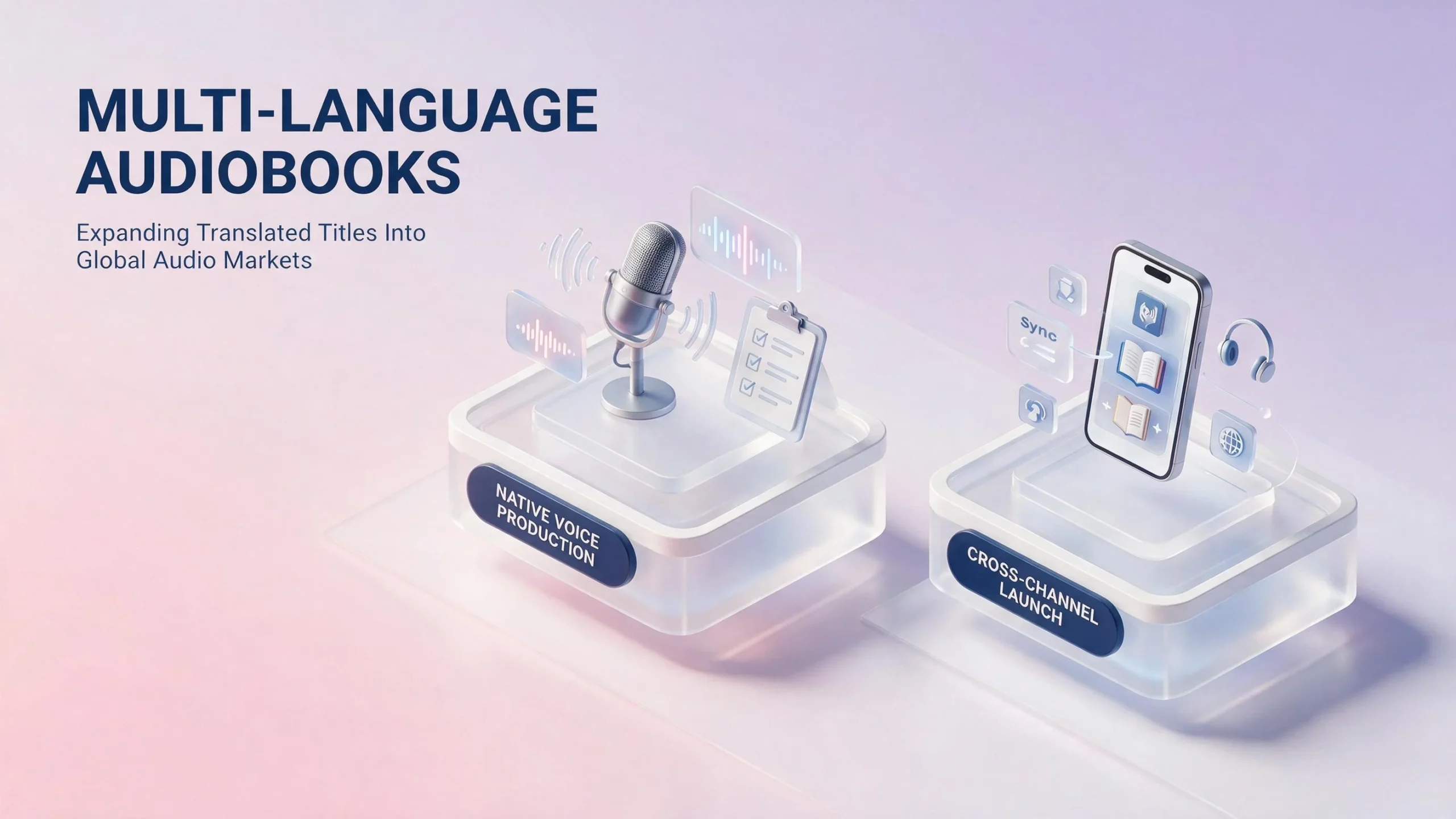
A translated manuscript is only half the opportunity. Audiobook consumption keeps growing across international markets, and an author who’s already invested in translation is sitting on content that’s a natural fit for a second format most never get around to producing.
Native Voice Talent: Why the Choice Matters More Than It Seems
Casting a narrator who speaks the target language natively not just fluently as a second language matters enormously for how a translated audiobook actually lands. Accent, natural rhythm, and pronunciation carry information a listener processes instantly and often unconsciously; a narrator working outside their native language, however skilled, can introduce a subtle disconnect that pulls a listener slightly out of the story without them being able to articulate exactly why. Matching narrator gender, age range, and vocal tone to your book’s protagonist and genre matters here just as much as it does for an English-language production.
Pronunciation Guides Solve a Problem Most Authors Don’t Anticipate
Character names, invented fantasy terminology, and specific place names don’t always have an obvious pronunciation in a new language, and inconsistent pronunciation across a long audiobook is jarring in a way readers of the print edition would never even notice. Building a pronunciation guide before recording begins confirming how every proper noun and invented term should sound in the target language prevents a narrator from making inconsistent choices partway through a multi-hour recording, or having to redo sessions once an inconsistency gets caught in review.
ACX Distribution Standards Aren’t the Same Everywhere
Audiobook distribution platforms maintain specific technical standards file format, audio levels, noise floor requirements and these standards need to be met regardless of which language the recording is in. What changes internationally is less the technical spec and more the platform landscape itself: certain markets favor different audiobook platforms over ACX entirely, and understanding where your target market’s audiobook listeners actually subscribe matters as much as meeting the technical requirements for the platform you choose.
Cross-Channel Promotion: Making the Formats Work Together
A translated audiobook shouldn’t launch as an isolated product disconnected from the translated print and eBook editions already in that market. Cross-promoting all three formats together mentioning the audiobook in eBook back matter, running a launch promotion across formats simultaneously rather than staggering releases months apart builds momentum that a single-format, siloed launch in a new market rarely achieves on its own.
Why This Sequencing Makes Sense
Producing a translated audiobook after the written translation already exists, rather than as a completely separate project, keeps voice and tone consistent between formats. A narrator working from a translation that’s already been through author review and cultural adaptation is reading a text that’s already been carefully shaped for that language’s readers not raw source material that still needs the same interpretive decisions a print translator already made once.
Authors who extend a translated title into audio aren’t just adding a format. They’re reaching listeners in that market who prefer audio as their primary reading format entirely, a segment print-only translation never reaches on its own, and one that keeps growing as international audiobook adoption climbs year over year.