
So you’ve finished your manuscript
Congrats!!!
That part alone puts you ahead of most people who say they’re “writing a book.” But there’s another decision coming up that matters just as much: who’s actually going to turn those pages into something real.
Type “book publishing company USA” into Google and you’ll see what I mean — pages and pages of options, half of them sounding basically identical. Let’s get through some of that noise.
Why This Decision Is a Big Deal
Here’s the thing about publishers; printing pages and slapping on a cover is the easy part, and it’s honestly not what you’re paying for. The real job is standing between what you wrote and the reader who eventually picks it up.
Land a solid one and your voice stays intact while your book actually finds readers. End up with the wrong one, though, and you could lose months, your budget, or worse — the rights to something you spent years writing.
So yeah, slow down before you sign anything.
Step One: Know What Kind of Publisher You’re Looking At
Here’s something a lot of first-time authors don’t figure out until they’re already knee-deep in it: “publisher” doesn’t mean one specific thing.
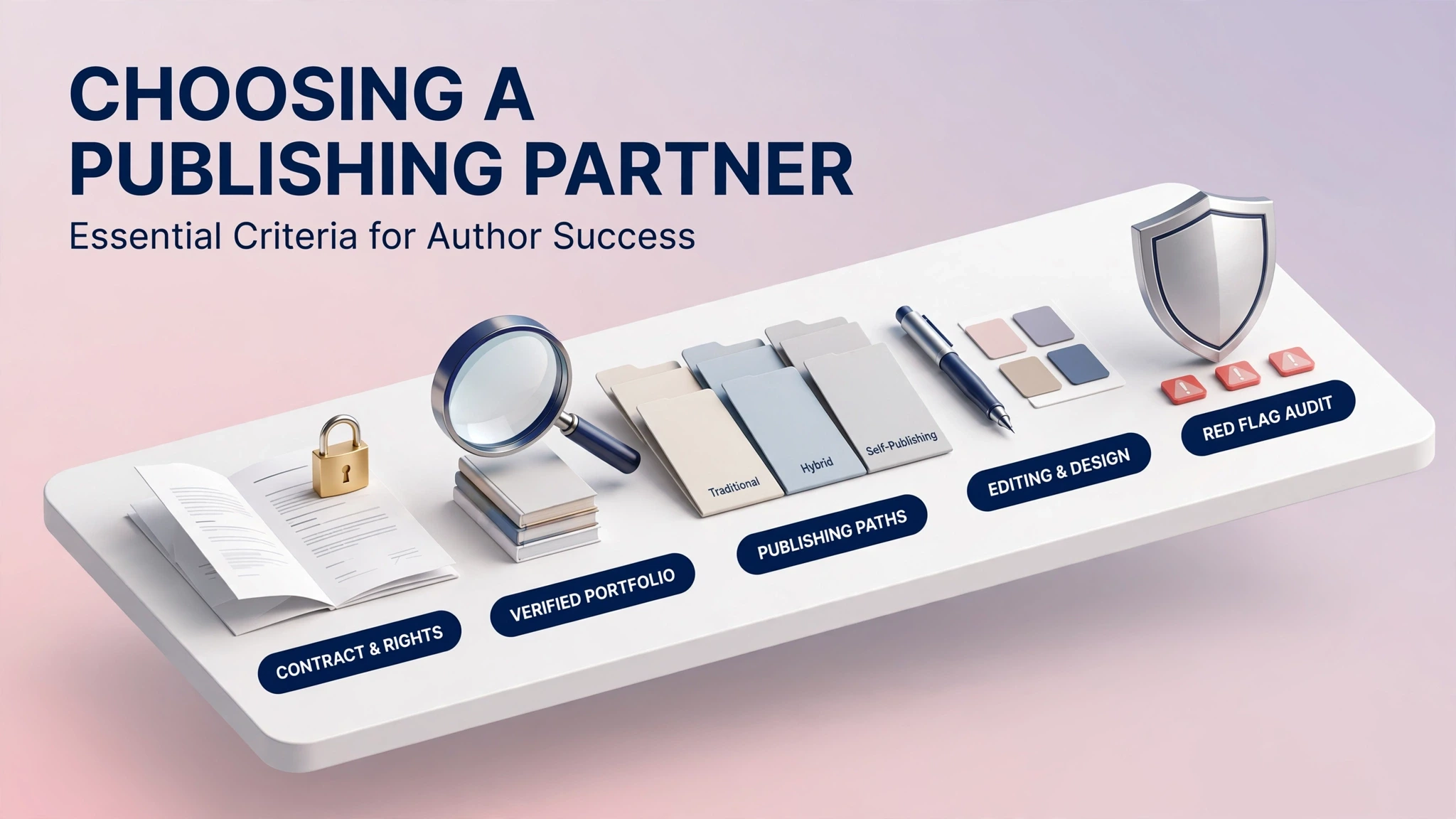
Traditional publishing houses cover the costs and cut you a royalty check, but good luck getting through the door without an agent — it’s genuinely a tough market to break into. Hybrid publishers work differently — you’re putting money in too, and in return you get their editors, designers, and distribution setup. Then there’s self-publishing, where you’re calling every shot yourself, for better or worse. Vanity presses tend to be the ones charging a small fortune while doing barely anything for you in return.
Before comparing book publishing companies in the USA, figure out which category you’re actually dealing with. Understanding the difference between traditional, hybrid, and self-publishing can help you choose a publishing company for authors that actually matches your goals and expectations.
Actually Look at What They’ve Published
Feels obvious once you say it out loud, but you’d be surprised how many authors never actually check.
Look up real titles this company has put out. Can you find them for sale on Amazon or at Barnes & Noble? Do the covers look like something an actual designer touched? If you’re researching the best book publishers in the USA, don’t rely only on testimonials sitting on a company’s own website. Go dig up reviews from authors who’ve actually worked with them.
If you can’t find any real, verifiable work — that alone should make you nervous.
Read the Contract. Actually Read It.
This is the part everyone wants to rush, and it’s usually the part they end up regretting.
Before you put your name on anything, make sure you’re clear on a few things:
● Who ends up owning the rights to your book
● What royalty percentage you’ll actually earn, and how often that money shows up
● Whether the contract locks you in for a set term or drags on indefinitely
● Whether there’s a genuine way out if things go wrong
If a publisher is pushing you to sign fast, or won’t give straight answers on any of that — that’s not them being eager. That’s them hoping you won’t ask twice.
Whose Actually Editing and Designing Your Book?
This is honestly where you can tell the good publishing companies apart from the ones just going through the motions.
Do you get an actual dedicated editor, or does your manuscript get passed around? How many rounds of edits are actually included? Who’s designing the cover, and does your opinion count for anything? Is formatting done by their own team, or farmed out to whoever was cheapest that week?
Treat editing and design like an afterthought, and the finished book will read exactly like one.
Don’t Skip Distribution and Marketing
Getting your book printed is honestly the easy half. Getting it in front of actual readers is what separates a real publisher from a print shop with a fancy name.
A publisher worth your time will spell out exactly where your book gets sold — print, eBook, audiobook — what kind of marketing push comes with it, and what the plan looks like once launch day comes and goes.
If “we’ll print it” is basically the whole pitch, plan on doing the marketing yourself.
Watch How They Communicate
You’re going to be working with these people for months, so pay attention early — starting with the very first email you send them.
Do they reply in a reasonable amount of time? Do you have one actual person to talk to, or does it feel like a call center? Can they walk you through the process without making it confusing? All of that tells you something. And if the communication feels off right from the start, trust that instinct.
Pricing: Look Past the Number
Price matters, obviously, but a number by itself doesn’t really tell you much.
Find out exactly what that number includes — editing, cover design, formatting, distribution, marketing — and ask directly if fees are waiting to show up later that nobody mentioned upfront.
A lower price doesn’t automatically mean a worse deal, and paying more doesn’t guarantee a better one either. What you’re really paying for is honesty about what you’re getting.
Red Flags to Remember
● A promise that your book is guaranteed to be a bestseller
● Being pressured to sign right away
● Vague or dodgy answers about rights and royalties
● Nothing to show you when you ask about real published titles
● A big payment upfront with barely any explanation of what it’s for
None of this is really about speed — it was never about which publisher can crank out your book the fastest. It comes down to finding the right book publishing company in the USA: people who respect the work you put in, treat you like an actual partner, and genuinely care whether your book does well.
Take your time with this. Ask the questions that feel awkward to ask. If you’re comparing the best book publishers in the USA, look beyond promises and pricing and focus on the quality of their services, communication, and commitment to authors. And if your gut tells you something’s off, walk away — seriously.
This is how we approach it at Trinity Publishing Press: hands-on with authors from the first edit all the way through distribution. As a publishing company for authors, we believe your book deserves a team that’s as invested in it as you are.
Got a manuscript and ready to talk it through? Reach out to Trinity Publishing Press— let’s chat.