
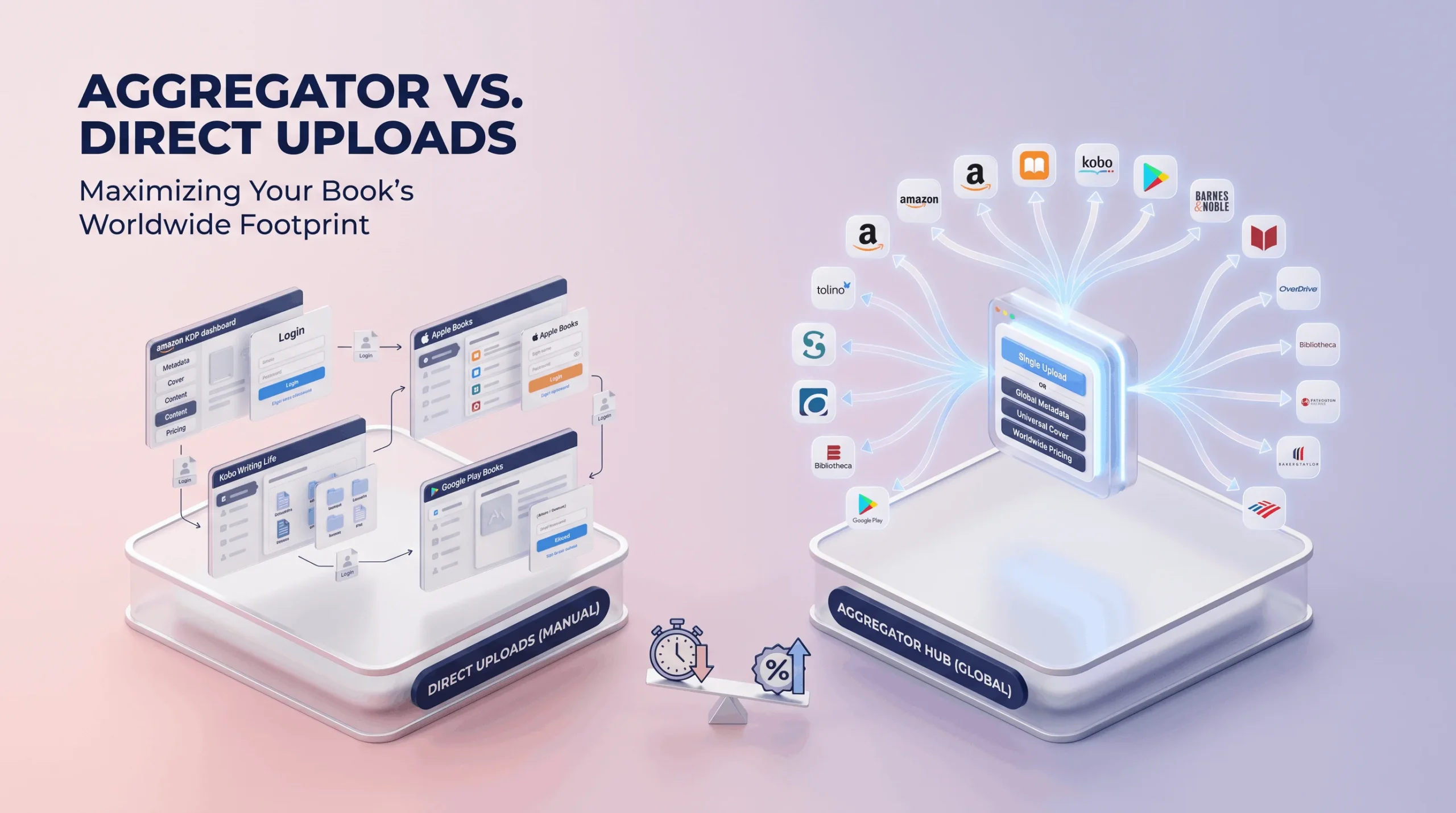
Every author eventually faces this decision: manage individual accounts on every platform separately, or work through a single distribution service that handles the whole network at once. The choice affects far more than convenience it shapes how much of the world your book actually reaches.
Managing Multiple Publisher Dashboards: What Direct Upload Actually Requires
Direct uploading means creating and maintaining a separate account on every platform you want your book listed on Amazon KDP, Apple Books, Kobo, Google Play, and any additional regional or library-specific platforms relevant to your genre. Each dashboard has its own login, its own metadata requirements, its own formatting quirks, and its own reporting interface, none of which talk to each other or share data automatically.
The Real Time Cost Authors Frequently Underestimate
Setting up a single platform correctly takes real time verifying metadata, testing file compatibility, configuring pricing for that specific market. Multiply that setup work across eight or ten separate platforms, then multiply it again every time you release a new title, and the cumulative time investment becomes substantial, time an author could otherwise spend actually writing the next book.
Single-Point Global Distribution: The Aggregator Alternative
A distribution service consolidates this entire process into one submission point, handling the individual platform relationships on your behalf. You submit your file and metadata once, and the service manages formatting and submission across the full network of connected platforms, removing the need to personally learn and maintain a dozen separate technical relationships.
Metadata Management: Where Consistency Actually Matters
Metadata inconsistency across platforms a slightly different book description on one storefront, an outdated category on another quietly undermines discoverability and looks unprofessional to readers who happen to compare listings across retailers. Centralized distribution keeps metadata consistent across every platform simultaneously, updating everywhere at once rather than requiring manual updates repeated individually on each separate dashboard.
Cost Efficiency: Direct Upload Isn’t Actually Free
Direct uploading avoids a distribution service’s fee, which looks like the cheaper option on paper. But the real cost includes the author’s own time, the risk of formatting errors slipping through on platforms managed without dedicated technical expertise, and the practical ceiling on how many platforms a single person can realistically manage well simultaneously without something eventually falling through the cracks. Factoring in genuine time cost, a distribution service frequently proves more cost-efficient than it initially appears against a purely direct-upload comparison.
When Direct Upload Still Makes Sense
For an author focused exclusively on one or two primary platforms, with no near-term plans for wider international distribution, direct upload remains a genuinely reasonable choice the overhead of managing a small handful of accounts personally is manageable, and the aggregator’s added value shrinks considerably when the scope stays deliberately narrow.
Making the Right Call for Your Actual Goals
The decision comes down to actual ambition and available bandwidth. An author planning a wide, genuinely international release, across multiple formats and dozens of regional platforms, benefits enormously from centralized distribution management. An author intentionally staying focused on a single primary market may reasonably handle direct uploads without meaningful downside. Understanding which category actually describes your specific goals, honestly, before committing time to either approach saves real frustration down the line.