
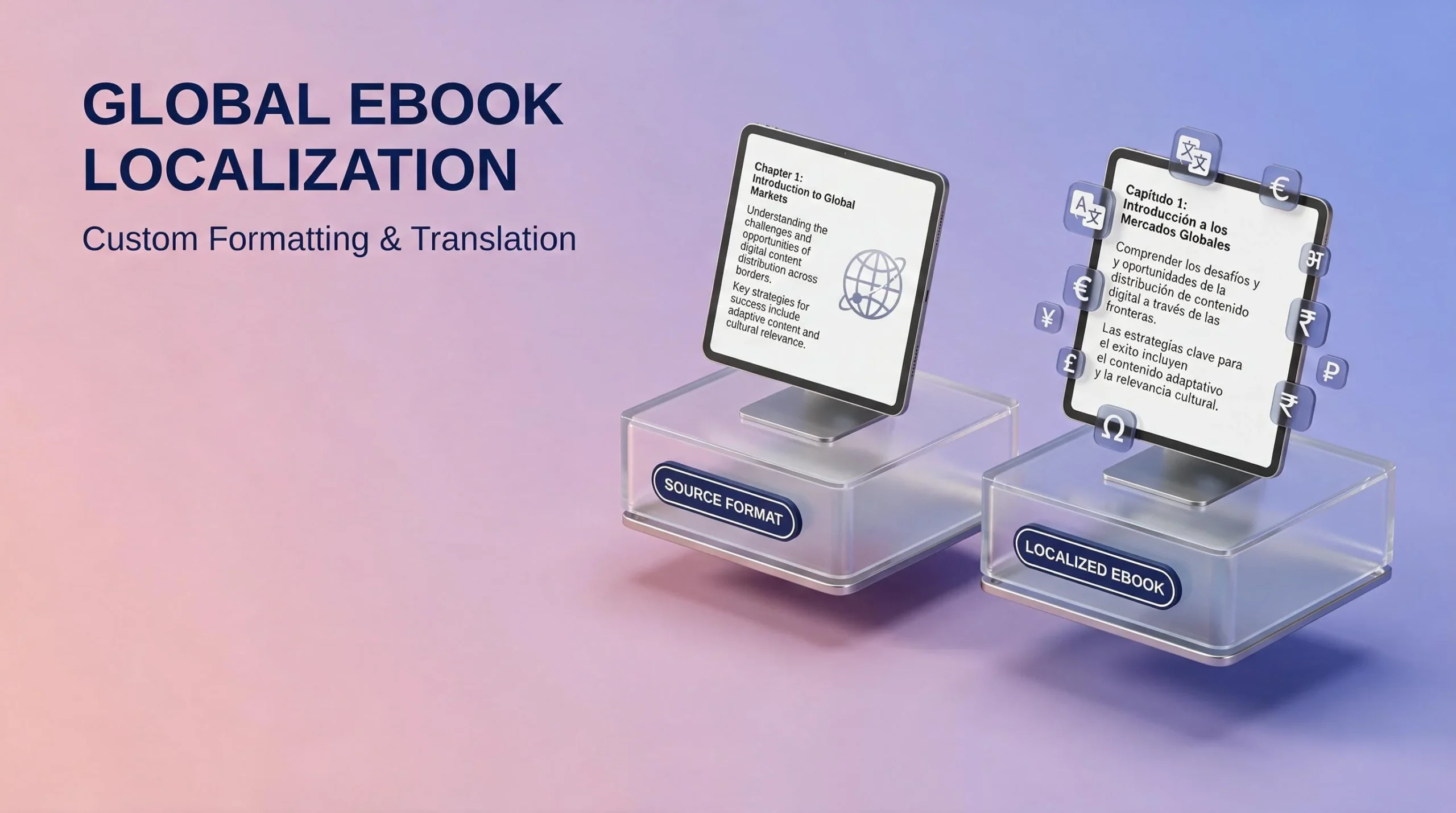
Most authors think about translation and formatting as two separate projects, handled by two separate people, at two separate times. That separation is exactly where things tend to go wrong because a translated manuscript rarely drops cleanly into the same formatting template that worked for the English edition.
Why Non-English Typography Breaks English-First Templates
Formatting rules built around English text assumptions don’t automatically hold up once the language changes. German compound words run significantly longer than their English equivalents, which can wreck careful line-break formatting designed around shorter English phrasing. French requires specific spacing conventions around certain punctuation marks that English formatting simply doesn’t account for. A template built exclusively for English text often needs real rework, not just a straight text swap, once translation enters the picture.
Right-to-Left Layout: A Completely Different Reading Direction
Languages like Arabic and Hebrew read right to left, which doesn’t just flip the text it flips the entire reading experience. Page-turn direction reverses. Chapter navigation needs to be restructured around that reversed flow. Images with directional elements, like an arrow pointing toward a next step, may need to be mirrored so they still make visual sense in the new reading direction. Treating a right-to-left translation as a simple text substitution into an existing left-to-right layout produces a file that’s technically translated but functionally broken for how the target readers will actually navigate it.
International Store Setup Isn’t Just Translated Copy
Getting a translated eBook properly listed on international storefronts involves more than swapping the book description into a new language. Category conventions differ by region genre labels that map cleanly in the U.S. market don’t always have a direct equivalent elsewhere. Keyword research needs redoing entirely in the target language, since a phrase that drives search traffic in English rarely translates to the term readers in another market are actually searching for.
Digital Localization Tactics That Actually Move the Needle
Real localization goes beyond direct translation. Currency references, cultural idioms, and even certain narrative examples sometimes need light adaptation to land the way they were intended for a different market’s readers. A single reference that reads as an obvious joke to an American audience can fall completely flat, or read as confusing, to a reader in another country without that specific cultural context and no amount of formatting polish fixes a joke that simply doesn’t translate.
Why Sequencing the Work Matters
Running custom eBook creation services and book translation services as one connected process, rather than translation first and formatting bolted on afterward as a separate step, avoids a specific and common failure: a beautifully translated manuscript poured into a layout that was never built to handle the new language’s typography, spacing, or reading direction. When formatting decisions get made with the target language in mind from the start, the finished file reads as though it was built for that market not adapted after the fact and hoping nothing broke in translation.
The Payoff for Authors Willing to Do This Right
Authors who treat translation and formatting as one coordinated project open genuinely new markets, not just a translated file sitting quietly in a store few of those readers will ever find formatted correctly enough to trust. Combining custom eBook creation services with book translation services from the outset is what actually turns “available in French” into “readable and genuinely enjoyable in French” and that difference is usually the one separating international sales that trickle in from ones that actually take off.